Choosing among China’s top mold manufacturing suppliers requires more than comparing quotations. A professional buyer must examine technical capability, process control, communication, and long-term reliability. The cheapest offer may look attractive. It may also hide weaker steel, unclear tolerances, or limited trial-shot support.
As injection-molding expert John Bozzelli puts it, “The mold is the heart of the injection molding process.” That idea matters when evaluating a Chinese supplier. A capable factory should explain its mold design, cooling layout, ejection system, and expected cycle time in clear language. It should also provide steel certificates, dimensional inspection reports, and realistic production schedules. Ask to see similar projects, not only polished factory photographs.
Look closely.
An experienced supplier will discuss parting lines, shrinkage, draft angles, and difficult surface areas before production begins. It should support DFM reviews and record every approved design change. During sampling, request trial-shot data, sample measurements, and a corrective-action plan. These details reveal how the team works under pressure.
Factory audits can add useful confidence. Check machining equipment, inspection tools, maintenance records, and mold storage conditions. A clean workshop is helpful, but it is not proof of quality. Evidence matters more. Remote communication also deserves attention, especially across time zones and language differences.
Cost still matters, but total value matters more. Consider maintenance, spare parts, revisions, shipping, and future production support. No checklist is perfect. I have seen impressive presentations fail during sampling. Therefore, choose a supplier that welcomes questions, documents limitations, and improves after mistakes. That combination builds a dependable mold manufacturing partnership.
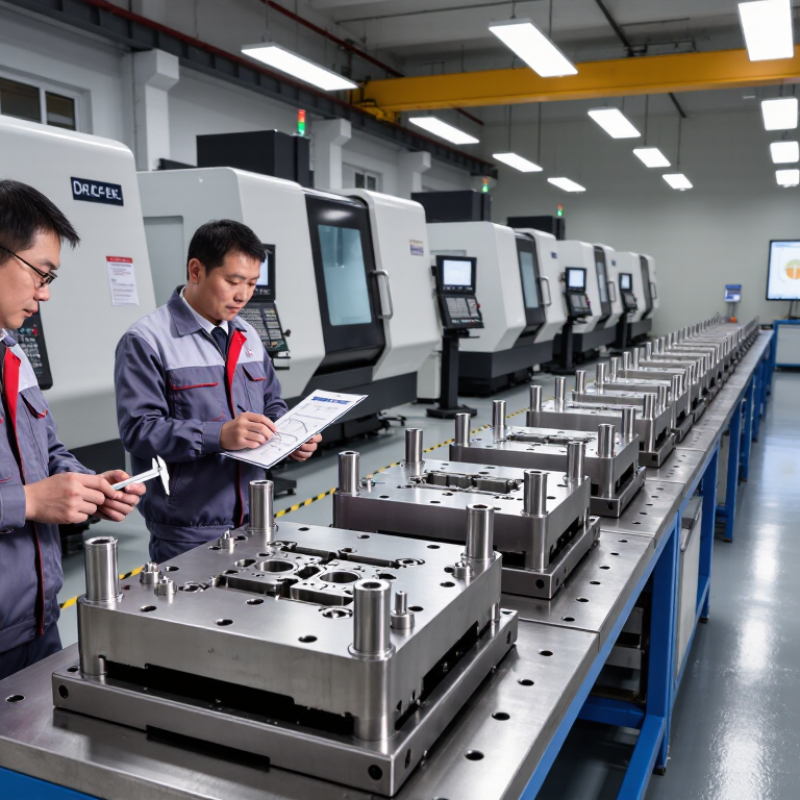
China’s mold manufacturers are not merely tooling vendors. They connect product design, material selection, production, and delivery within the supply chain. The China Die & Mould Industry Association reported industry output above RMB 300 billion in 2023. It also noted more than 30,000 related enterprises nationwide. This scale creates capacity, but capacity alone does not prove reliability.
A capable manufacturer converts a CAD file into a stable production process. Its engineers review wall thickness, draft angles, cooling channels, and steel selection before machining begins.
In practical sourcing reviews, I check trial-shot records, dimensional reports, maintenance plans, and response times. These details show whether the supplier manages risk or only sells a quotation. Not merely tooling.
UN Comtrade data for 2023 places China among the leading exporters under HS 8480, covering molds and related tooling. That trade position reflects strong manufacturing depth, but buyers should read the data carefully. Export volume does not measure design quality, communication, or after-sales discipline. A polished sample can still hide weak process control.
I would request cavity-balance results, material certificates, and clear acceptance criteria. The imperfect part is often the specification itself. If drawings remain vague, even an experienced mold manufacturer may build the wrong solution. Suppliers should therefore be judged as supply-chain partners, not only by price or machining speed.
Choosing among China’s top mold manufacturing suppliers starts with defining the mold type and production requirements. A prototype mold may suit a short trial, while a production mold needs stronger steel, stable cooling, and reliable cycle performance. Injection, compression, die-casting, and blow molds require different designs, machines, and maintenance plans.
Specify the product material, dimensions, surface finish, draft angles, and expected annual volume. Include tolerance requirements, part weight, gate location, and any visible cosmetic areas. A supplier should review the 3D model and identify difficult ribs, thin walls, undercuts, or uneven shrinkage before quoting. Ask for a mold-flow assessment when warpage could affect assembly. Small details matter.
Do not judge a supplier by price alone. Request evidence of similar mold projects, inspection records, trial reports, and corrective-action experience. Confirm the available machine size, clamping force, steel traceability, spare-part policy, and delivery milestones. Sample parts should be measured against agreed drawings, not judged only by appearance.
I once underestimated cooling time during an early project, and the promised cycle became unrealistic. That mistake showed why production data must shape the mold design. A perfect forecast is rarely possible. Leave room for controlled adjustments after the first trial.
China Top Mold Manufacturing Suppliers: How to Choose?
Supplier expertise should match your mold, material, and production volume. Ask for recent projects with similar part sizes and tolerances. Review tool design samples, not only finished photographs. Experienced engineers should explain parting lines, draft angles, cooling channels, and expected mold life. Their answers should be practical and easy to verify.
Equipment reveals production capability. Check whether the facility operates CNC machining centers, EDM machines, wire cutting equipment, and coordinate measuring machines. Ask about machine accuracy and maintenance records. During a visit, inspect the toolroom floor. Clean work areas do not prove everything, but neglected machines raise reasonable concerns. A trial mold test should record injection pressure, cycle time, part weight, and visible defects.
Quality systems must control each stage. Request steel certificates, inspection reports, drawing revisions, and material traceability records. A reliable supplier uses measurable checkpoints before machining, assembly, sampling, and shipment. Ask how the team handles flash, sink marks, or cooling imbalance. Their corrective-action report should identify causes, actions, and verification dates. Delivery history also matters; one successful project proves little. I once gave too much weight to impressive equipment and overlooked weak communication. That mistake is worth remembering. Good suppliers welcome detailed questions, admit limits, and provide evidence instead of confident promises.
This chart presents a practical evaluation weighting for mold suppliers. Technical expertise, production equipment, and quality systems should receive the greatest attention because they directly influence mold accuracy, service life, consistency, and production reliability. The percentages are evaluation guidelines rather than company-specific performance data.
When comparing mold suppliers, do not judge price alone. Request an itemized quotation covering steel grade, cavity count, mold base, machining, sampling, and shipping. A low price may exclude polishing, texture, or trial adjustments. Check the promised lead time against your product’s complexity. A simple two-plate mold may take weeks, while complex slides and tight tolerances require longer testing. Ask for a production schedule with design approval, steel cutting, first trial, inspection, and final delivery dates. Delays can happen. The supplier should explain them early.
Communication often reveals practical experience. During the design stage, ask for a DFM report with clear notes on draft angles, wall thickness, weld lines, and ejection risks. Reliable teams answer technical questions directly and provide measured feedback. Progress photos are useful, but inspection reports are stronger evidence. Confirm who handles time-zone differences, engineering changes, and urgent decisions. Vague replies create expensive misunderstandings.
Tips:
Compare at least three complete quotations, not three headline prices. Ask for recent samples with similar tolerances. Confirm correction policies after the first trial. Check whether spare inserts, maintenance guidance, and replacement support are included. A supplier may promise excellent service, yet slow replies after payment should make you reconsider. One weakness remains easy to miss: communication quality during a difficult mold correction often matters more than a polished sales presentation.
China Top Mold Manufacturing Suppliers: How to Choose?
When evaluating a mold supplier, request a trial sample before discussing large production volumes. Check part dimensions, surface finish, draft angles, and ejection marks under normal inspection conditions. Ask for the inspection report and compare it with your own measurements. A sample may look excellent while hiding difficult maintenance issues. That happened in a project I reviewed. The first sample passed visually but required excessive polishing around the gate.
Certifications need more than a scanned logo. Confirm the certificate number, issuing body, validity period, and covered manufacturing site. Check whether the certification applies to the supplier’s actual process, not only its administrative office. Request material certificates for mold steel and verify the stated grade with supplier records. Small details matter. An experienced supplier should explain tolerances clearly and identify risks before signing.
A written contract should define steel grade, mold life, cavity numbers, delivery milestones, acceptance standards, ownership of drawings, and revision charges. Include a remedy for delayed delivery or failed sampling. After-sales support also deserves practical testing. Ask who handles repairs, how quickly engineers respond, and whether replacement inserts can be produced from stored data. Try one technical question before placing an order. The reply may reveal more than a polished factory tour. My own mistake was accepting vague repair promises. They sounded reasonable, but the contract contained no response time. That gap became expensive.
| Category | Verification Dimension | Recommended Benchmark | Evidence to Request | How to Evaluate | Warning Sign |
|---|---|---|---|---|---|
| Sample Verification | Prototype and first-shot sample | A documented T0 or first-trial sample should be provided for dimensional and visual review before final acceptance. | Sample parts, trial report, process parameters, dimensional inspection report, and defect photographs. | Compare critical dimensions, parting lines, gate marks, weld lines, sink marks, flash, warpage, and surface finish with the approved drawing. | Only edited photographs or samples without inspection records. |
| Sample Verification | Dimensional capability | Critical dimensions should have defined tolerances, measurement methods, and traceable results. For stable mass production, capability targets such as Cpk ≥ 1.33 are commonly requested for critical features. | FAI report, CMM report, gauge calibration records, control plan, and measurement equipment list. | Check whether the report identifies datum references, measurement equipment, sample quantity, actual values, and acceptance criteria. | “Passed” is stated without actual measurements or drawing references. |
| Sample Verification | Material and color validation | The resin, steel, aluminum, or other specified material should match the approved specification and application requirements. | Material certificate, resin certificate, lot number, color standard, and laboratory test report where applicable. | Verify grade, manufacturer batch or lot, certificate date, and consistency between the certificate and production records. | Material substitutions are made without written approval. |
| Technical Capability | Design for manufacturability | The supplier should review draft angles, wall thickness, ribs, bosses, cooling, ejection, parting lines, and gate locations before tool design release. | DFM report, mold-flow analysis when needed, 3D mold layout, and design-review meeting records. | Confirm that risks, recommended changes, and customer approvals are documented before manufacturing begins. | Tool construction starts before design risks are reviewed. |
| Technical Capability | Equipment and inspection capacity | The facility should have suitable CNC machining, EDM, grinding, fitting, trial molding, and measurement capabilities for the specified mold size and complexity. | Equipment list, machine specifications, maintenance records, calibration certificates, and factory audit photographs or video. | Match machine travel, tonnage, accuracy, and inspection range with the project requirements. | Key operations are outsourced without disclosure or process control. |
| Certifications | Quality management system | ISO 9001 certification is a useful baseline for documented quality processes, corrective action, document control, and internal auditing. | Current certificate, certification scope, issuing body, certificate number, and expiration date. | Confirm the certificate through the issuing or accreditation body and ensure the scope covers mold design or manufacturing. | Certificate is expired, unverifiable, or issued for an unrelated business scope. |
| Certifications | Industry-specific compliance | For automotive, medical, electrical, or export projects, verify any required quality, environmental, safety, or regulatory standards before quotation. | Applicable certificates, compliance declarations, audit reports, and customer-specific approval records. | Assess whether the certification is legally or contractually relevant to the product rather than treating all certificates as equivalent. | Generic certificates are presented instead of project-specific compliance evidence. |
| Contract Protection | Technical specification and acceptance criteria | The contract should define drawings, revisions, steel and component specifications, tolerances, surface finish, sample approval, and final acceptance criteria. | Signed quotation, technical agreement, approved drawings, quality agreement, and change-control procedure. | Check that commercial documents and technical documents use the same revision and measurable requirements. | Important requirements exist only in informal messages or verbal discussions. |
| Contract Protection | Ownership, confidentiality, and tooling rights | The agreement should identify ownership of mold drawings, CAD files, inserts, spare parts, data, and the physical mold after payment. | Confidentiality agreement, intellectual-property clause, tooling ownership clause, and return or transfer procedure. | Confirm that the supplier cannot reuse, transfer, or modify customer-owned tooling without written authorization. | Ownership is described as “subject to mutual discussion” after payment. |
| Contract Protection | Schedule, payment, and change management | Use milestone-based payments linked to design approval, steel cutting, trial samples, final acceptance, and document handover. | Project schedule, milestone invoice plan, delay responsibility, engineering-change form, and approval workflow. | Ensure changes affecting cost, timing, performance, or tooling are approved in writing before implementation. | Full payment is required before measurable acceptance or document delivery. |
| After-Sales Service | Warranty and defect responsibility | A written warranty should define coverage, exclusions, response time, repair or replacement responsibility, and the validity period after acceptance or production use. | Warranty terms, defect classification, corrective-action form, spare-parts policy, and service contacts. | Confirm that premature wear, dimensional instability, cooling problems, ejection failure, and workmanship defects have clear remedies. | Warranty excludes nearly all functional or production-related problems. |
| After-Sales Service | Technical response and corrective action | The supplier should provide a named technical contact, acknowledge urgent issues within one business day, and submit a root-cause and corrective-action plan for confirmed defects. | Service-level agreement, escalation matrix, 8D or corrective-action template, and remote troubleshooting procedure. | Test the response process with a sample technical question before placing an order. | Sales staff cannot provide engineering support after the quotation stage. |
| After-Sales Service | Maintenance and spare-parts support | The supplier should deliver maintenance instructions, wear-part lists, recommended inspection intervals, and replacement-part identification. | Mold maintenance manual, exploded drawings, spare-parts list, lubrication schedule, and service history template. | Check whether parts are standardized, clearly identified, available for reorder, and supported by drawings or specifications. | No maintenance records or spare-parts information is supplied with the mold. |
| Final Decision | Supplier comparison score | Use weighted scoring: samples and quality 30%, technical capability 20%, certifications 10%, contract protection 20%, delivery and communication 10%, after-sales service 10%. | Completed supplier questionnaire, audit checklist, sample evaluation, quotation comparison, and risk register. | Prefer documented evidence over price alone. Require corrective action for critical nonconformities before approval. | The lowest quotation is selected despite unresolved quality, ownership, or service risks. |