2026 Top Mold Manufacturing Companies for Global Buyers?

2026 Top Mold Manufacturing Companies for Global Buyers?

Choosing a mold manufacturing partner in 2026 requires more than comparing prices. Buyers need evidence of engineering capability, production stability, and honest communication. A polished website proves very little.

John P. Beaumont, a respected injection-molding expert, has said, “The mold is the heart of the injection molding process.” That principle remains practical today. A reliable supplier should understand steel selection, cooling-channel design, draft angles, surface finishes, and cycle-time targets. These details affect every molded part. They also influence maintenance costs months later.

This introduction outlines leading mold manufacturing companies for international buyers. It considers tooling experience, quality systems, machinery, export support, and after-sales service. Real indicators matter. Look for CMM inspection reports, mold-flow analysis, trial-shot records, and clear tolerance reviews. Ask how suppliers manage changes after a T1 sample. Ask who owns the technical decisions.

Low cost can be attractive. It can also hide weak design work. A delayed mold may stop an entire product launch. Even respected manufacturers can miss a difficult requirement. Rankings cannot predict every project perfectly. Buyers should still audit samples, review references, and confirm production capacity.

The strongest companies combine practical craftsmanship with digital control. They communicate risks before cutting steel. That habit builds trust. For global buyers, the right choice is not always the largest factory. It is the partner that can repeatedly deliver accurate molds, stable cycles, and dependable support across borders.

2026 Top Mold Manufacturing Companies for Global Buyers?

What Defines a Top Mold Manufacturing Company in 2026?

A top mold manufacturing company in 2026 is defined by repeatable engineering, not attractive promises.

Experienced teams review part geometry before quoting. They check draft angles, wall thickness, weld lines, cooling access, and expected production volume. This early review can prevent costly changes after machining begins. It also shows whether the supplier understands real manufacturing conditions.

Technical depth matters at every stage. Skilled mold engineers use flow analysis, precise CAD data, and documented design reviews. Machinists should control cavity dimensions with coordinate measuring equipment, while technicians record steel treatment, polishing results, and trial adjustments.

Small details matter. A poorly balanced cooling circuit can create warpage, longer cycle times, and uneven surfaces. Clear inspection reports help buyers verify these risks instead of relying on verbal assurances.

Reliable suppliers also provide traceability and practical communication across borders.

They confirm tolerance requirements, sampling schedules, spare-part plans, and packaging conditions in writing. Production trials should include measured results, not only attractive sample photos. No supplier gets every trial right. That is normal.

What matters is how openly the team investigates a short shot, flash, or ejection mark. I have found that honest correction records often reveal more professionalism than a perfect first sample.

Some evaluations still focus too heavily on price, which can hide maintenance costs and delayed production. A top company makes those trade-offs visible before the mold enters production.

How to Evaluate Mold Manufacturers for Global Sourcing

For global buyers in 2026, evaluating mold manufacturers requires more than comparing quotations. Examine their experience with similar parts, materials, and production volumes. Ask for anonymized case evidence, not polished claims. A capable team should explain draft angles, parting lines, shrinkage, cooling channels, and expected mold life in clear language. Their engineers should identify risks before cutting steel.

Request a detailed tooling specification. It should list steel grade, cavity count, tolerance targets, surface finish, hot-runner or cold-runner design, and inspection methods. Review sample reports, dimensional records, and change-control procedures. ISO certification can support credibility, but verify its scope and current validity. A certificate alone proves little.

Communication is part of quality. Test how quickly the manufacturer answers technical questions. Ask who approves design changes and how revisions are recorded. Check machining capacity, backup equipment, maintenance planning, and production scheduling. A low price may exclude mold trials, spare inserts, or transport protection. Look closely. Supplier audits and video inspections help, though they cannot replace physical verification. I remain cautious about perfect promises. A checklist can miss weak cooling performance or difficult maintenance. Before full production, require a trial mold, sample approval, and a written correction plan. Also compare total ownership cost, including repairs, downtime, and future modifications.

Leading Mold Manufacturing Regions and Industry Specialties

For global buyers in 2026, mold selection begins with regional capability, not factory size. East China remains strong in high-volume injection molds, tight schedules, and integrated machining. South China often serves consumer electronics, medical housings, and complex multi-cavity tools. Its supplier networks can shorten sourcing time. Still, speed may hide communication gaps. Check drawings carefully.

Regional capabilities Central Europe is valued for precision molds, durable tool steel, and repeatable production for automotive and industrial parts. Suppliers there often emphasize process documentation, dimensional reports, and controlled maintenance. North America offers practical expertise in prototyping, low-volume production, and large structural molds. Regional shipping costs can alter the final advantage. A lower quote is not always cheaper.

An experienced buyer should match mold specialty to product risk. Thin-wall packaging needs balanced filling analysis and reliable cooling channels. Medical components require clean production controls, validation records, and strict change management. Large automotive panels demand stable clamping, warpage control, and accessible repair support. Ask for trial-shot data, steel certificates, inspection methods, and service response times. I have learned that polished samples can mislead. A mold may look excellent yet fail after repeated cycles. Independent audits and realistic acceptance criteria provide stronger protection than promises. Leave room for revision; even a well-engineered tool can reveal unexpected wear.

Key Technologies Used by Advanced Mold Manufacturing Companies

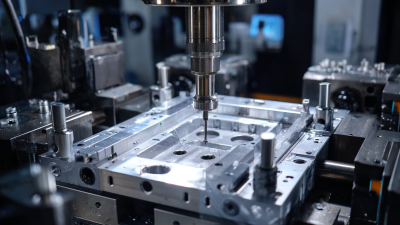
Advanced mold manufacturing companies now combine digital design, precision machining, and measurable process control. CAD and CAE software simulate filling, cooling, warpage, and shrinkage before steel is cut. This reduces trial-and-error, although simulation still depends on accurate material data. That weakness matters.

High-speed CNC machining and electrical discharge machining create complex cavities with tight tolerances. Conformal cooling channels, produced through metal additive manufacturing, can improve heat removal around difficult geometries. The 2024 Wohlers Report valued the global additive manufacturing industry at approximately 20 billion dollars in 2023. Its growth shows stronger adoption of printed tooling components and inserts. However, printed channels may increase finishing costs and inspection requirements. Engineers should compare cycle-time gains against total tooling expense.

Tips: Ask suppliers for mold-flow reports, dimensional inspection records, and cooling-channel evidence. Confirm steel certification and heat-treatment results. Request a sample measurement report, not only a tolerance promise. The International Federation of Robotics reported over 500,000 industrial robot installations worldwide in 2023, showing the expanding role of automated loading, polishing, and inspection. Still, automation cannot replace experienced process judgment. A camera may detect a surface mark, yet an engineer must decide whether it affects sealing, appearance, or service life. Look for traceable data, practical testing, and clear responsibility when results differ.

2026 Top Mold Manufacturing Companies for Global Buyers? – Key Technologies Used by Advanced Mold Manufacturing Companies
Technology or Capability Primary Manufacturing Function Typical Materials or Processes Buyer-Relevant Performance Indicators Common Applications Why It Matters for Global Buyers
CAD/CAM and 3D Mold Design Creates detailed part, mold-base, core, cavity, runner, cooling, and ejection designs before machining. Parametric 3D modeling, mold-flow preparation, design-for-manufacturing analysis, and standardized mold libraries. Typical result: earlier interference detection, clearer revision control, and reduced manual design work. Injection molds, die-casting dies, compression molds, and multi-part tooling. Digital design files improve communication across countries and help buyers review changes before steel is cut.
Mold-Flow Simulation Predicts filling, packing, cooling, weld lines, air traps, shrinkage, and possible warpage. Computer-based filling and cooling analysis using resin data, gate locations, runner layouts, and processing conditions. Key outputs: fill-time prediction, pressure requirement, cooling balance, weld-line location, and estimated deformation. Thin-wall parts, large automotive components, visible consumer products, and multi-cavity molds. Simulation can reduce physical trial-and-error and supports more reliable quotation, tooling, and production planning.
High-Speed CNC Milling Machines mold cavities, cores, inserts, electrodes, and mold bases with controlled tool paths. Three-axis, four-axis, and five-axis milling of hardened or pre-hardened tool steels, aluminum, and copper alloys. Typical capability: repeatable micron-level machine positioning, with final part accuracy depending on material, geometry, tooling, and inspection. Precision injection molds, die-casting tooling, optical surfaces, and complex free-form cavities. Advanced milling shortens machining time and improves access to deep or highly contoured mold features.
Wire and Die-Sinking EDM Produces narrow slots, sharp internal corners, deep ribs, fine details, and hardened-steel features that are difficult to mill. Electrical-discharge machining using shaped electrodes or continuously moving wire. Strength: accurate machining of hardened conductive materials and intricate geometries without direct cutting-force contact. Ejector slots, gear features, micro-details, deep ribs, inserts, and complex cavity profiles. EDM capability is essential when the mold design contains deep, narrow, or highly detailed features.
Laser Texturing and Surface Treatment Creates controlled textures, functional patterns, or decorative finishes on mold surfaces. Laser engraving, chemical etching, polishing, nitriding, chrome plating, and other surface-finishing methods selected for the application. Quality focus: texture repeatability, gloss control, release performance, wear resistance, and corrosion resistance. Automotive interior parts, appliance housings, packaging, medical components, and consumer products. Surface engineering affects appearance, demolding behavior, part durability, and long-term mold maintenance.
Conformal Cooling Places cooling channels closer to the shape of the cavity to improve heat removal and temperature uniformity. Advanced channel design combined with metal additive manufacturing, gun drilling, or hybrid manufacturing methods. Potential benefit: shorter cooling cycles, lower thermal variation, and reduced warpage when the design is correctly engineered. Complex plastic parts, thick-to-thin geometries, medical components, and high-volume production molds. Better thermal control can improve cycle consistency, but buyers should request validated cooling analysis and trial data.
Hot Runner and Valve-Gate Engineering Delivers molten plastic to one or more cavities while reducing or eliminating cold runners. Manifold systems, heated nozzles, valve gates, temperature controllers, and balanced runner layouts. Operational indicators: cavity balance, temperature stability, gate quality, material compatibility, and maintenance access. High-cavity packaging molds, medical parts, caps and closures, and high-volume technical components. Proper hot-runner design can reduce material waste and improve automation, but it requires careful setup and service planning.
Precision Measurement and Inspection Verifies mold dimensions, part geometry, surface condition, and assembly alignment. Coordinate-measuring machines, optical scanners, vision systems, height gauges, hardness testing, and documented inspection plans. Typical controls: dimensional reports, cavity-to-cavity comparison, steel-certification review, and first-article inspection. All precision tooling, especially multi-cavity molds and components with tight geometric tolerances. Independent measurement records give international buyers objective evidence of conformity before shipment.
Tool Steel Selection and Heat Treatment Matches steel grade, hardness, toughness, and corrosion resistance to the material and expected production volume. Pre-hardened steel, hardened tool steel, stainless mold steel, vacuum heat treatment, stress relieving, and cryogenic treatment where appropriate. Selection factors: abrasive or corrosive resin, expected shot count, polishability, dimensional stability, and repair requirements. Glass-filled plastics, medical molds, high-gloss parts, die-casting dies, and long-run production tooling. Correct material and heat treatment strongly influence mold life, repair frequency, surface quality, and total ownership cost.
Automated Electrode and Tool Management Controls the identification, storage, setup, and machining sequence of electrodes and cutting tools. Barcode or digital identification, presetting, tool-life monitoring, automated loading, and integrated production records. Production benefit: fewer setup errors, better repeatability, improved machine utilization, and more traceable process data. High-mix mold shops, complex EDM work, multi-cavity tooling, and repeat-order production. Traceable tooling data helps reduce avoidable delays and supports consistent quality across repeat projects.
Mold Assembly and Tryout Fits mold components, checks movement, tests filling and ejection, and confirms the tool is ready for production. Controlled assembly, hydraulic or mechanical function checks, sample molding, dimensional verification, and corrective actions. Acceptance evidence: approved trial parts, cycle parameters, defect records, dimensional reports, and documented corrections. Prototype molds, production molds, family molds, hot-runner molds, and complex unscrewing tools. A structured tryout process exposes design or process issues before the mold is exported or installed at the buyer’s facility.
Digital Traceability and Quality Systems Links design revisions, material certificates, inspection results, machining records, and corrective actions to each project. Manufacturing execution systems, enterprise resource planning, revision-controlled documentation, and standardized quality procedures. Buyer checks: revision history, steel certificates, inspection records, nonconformance reports, and change-approval workflow. Regulated products, export tooling, automotive programs, medical components, and repeat production. Complete documentation reduces disputes and makes maintenance, replacement, and future modifications easier.
Maintenance and After-Sales Support Maintains mold performance through preventive servicing, spare parts, troubleshooting, and repair guidance. Maintenance schedules, wear-part inventories, replacement inserts, lubrication plans, remote support, and service documentation. Useful measures: response time, spare-part availability, maintenance interval, repair turnaround, and supported production life. High-volume injection molds, export tooling, multi-site production, and molds requiring regular refurbishment. Reliable support reduces downtime and helps global buyers manage tooling over its complete operating life.
Sustainable Manufacturing Practices Reduces energy use, material waste, scrap, and unnecessary rework during tooling production and operation. Toolpath optimization, steel reuse where technically suitable, efficient machining, repairable inserts, and process monitoring. Assessment areas: material utilization, rework rate, energy management, mold repairability, and expected service life. Packaging, consumer goods, automotive, electronics, and other high-volume molding sectors. Longer-lasting and repairable tooling can lower lifecycle cost, waste, and production disruption.

How Global Buyers Can Select the Right Mold Manufacturing Partner

How Global Buyers Can Select the Right Mold Manufacturing Partner

Selecting a mold manufacturing partner requires more than comparing quotations. Experienced buyers examine tool steel grades, cavity tolerances, cooling layouts, and expected production cycles. Ask for inspection records, material certificates, and recent sample reports. A reliable supplier should explain risks in plain language. If every answer sounds perfect, look closer.

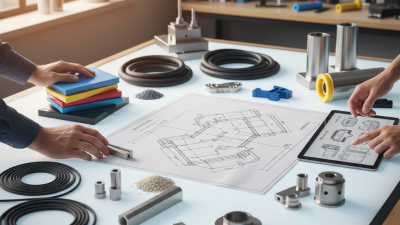
Request a design-for-manufacturing review before approving the mold. The review should identify parting lines, draft angles, sink marks, weld lines, and difficult ejection areas. Confirm who owns the tooling data and how revisions are controlled. Clear drawings matter. So does practical communication. A supplier that responds quickly but ignores technical details may create expensive delays later.

Clear
drawings
matter.

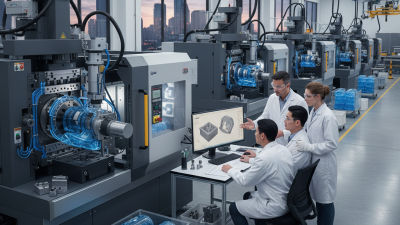
Visit the facility when possible, either physically or through a live video audit. Observe machining equipment, measurement systems, mold assembly, and trial procedures. Ask how maintenance records are stored and how defects are corrected. Production capacity should match your launch schedule, not merely impress you during a sales call. Check packaging, shipping documents, and quality responsibilities before payment terms are finalized. No partner is flawless. Even a strong trial can hide weak maintenance planning. Leave room for questions, independent inspection, and a small pilot order before scaling production.

NEW JERSEY

Location

Union Tool & Mold is a mold making, repair and plastic injection molding company located in central New Jersey.
(973) 763-6611

220 Rutgers St, Maplewood, NJ 07040
ACCREDITED

Certified Company


SOCIAL PROFILE

Let’s Connect

We invite you to engage with us on LinkedIn, where you can stay updated on our latest news, insights, and professional opportunities.