
Choosing the right Ring Main Switch is a practical decision for utilities, contractors, and industrial buyers. It affects network continuity, installation time, operator safety, and long-term maintenance costs. A polished product brochure cannot replace field evidence. Real performance appears in substations, coastal plants, crowded urban rooms, and dusty industrial sites.
As Dr. Martin H. Jones, a medium-voltage switchgear specialist, puts it: “A reliable Ring Main Switch is judged by its service life, not its first impression.” This view should guide every comparison. Brand reputation matters, but it is only one part of the decision. Buyers should examine rated voltage, load-switching capacity, short-circuit withstand, insulation design, gas or solid insulation, control options, and protection compatibility. Certification and documented testing deserve equal attention. Small details matter.
This guide reviews seven Ring Main Switch brands commonly considered by global buyers. It compares product range, technical strengths, after-sales support, customization, delivery capability, and value across different applications. Some brands lead in smart monitoring. Others perform better in harsh environments or regional projects. No brand wins every situation.
That is the uncomfortable part.
A low purchase price may hide expensive commissioning work. A famous brand may still offer a poor fit for a specific network. Buyers should verify local service coverage, spare-part availability, type-test reports, and installation requirements before signing contracts. Market information also changes quickly, so this ranking should not be treated as permanent. Use it as a starting point. Then test each claim against project conditions, operating experience, and independent technical evidence.
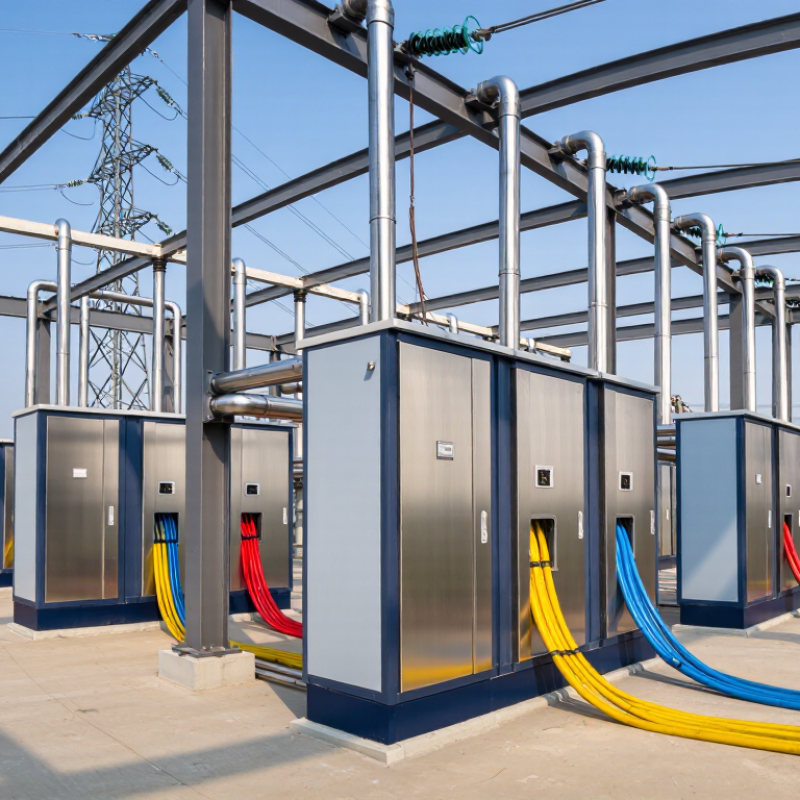
A ring main switch is a medium-voltage switching device used in distribution networks. It connects two feeder paths around a local transformer or customer site. Power can enter from either direction, which helps maintain supply during planned maintenance or a cable fault. Many ring main units include load-break switches, earthing switches, fuses, or circuit breakers. Their design depends on the network voltage, fault level, installation location, and operating method.
Brand selection matters because the switch must perform safely under real electrical stress. A reliable manufacturer should provide verified test reports, clear ratings, service instructions, and traceable production records. Look for compliance with relevant standards, such as IEC 62271 series requirements, rather than trusting a polished catalogue alone. Check short-time withstand current, insulation level, mechanical endurance, ingress protection, and interlocking quality. Small details matter. A stiff handle or unclear position indicator can create serious operating confusion.
A practical buyer should also examine local service capacity. Spare parts, training, response time, and commissioning support may matter more than a low purchase price. Ask for references from installations with similar humidity, temperature, altitude, and switching frequency. Do not ignore transport conditions. A well-tested unit can still suffer damage from poor packing or careless storage. One weakness in my own evaluation would be focusing too heavily on technical ratings. Operators need simple controls and readable labels too. The strongest choice balances laboratory evidence with what technicians can manage during a dark, rainy outage.

7 Best Ring Main Switch Brands for Global Buyers
When comparing ring main switch manufacturers, start with applicable standards, not catalogue claims. IEC 62271-200 covers metal-enclosed switchgear, while IEC 62271-103 addresses high-voltage switches. Check whether independent laboratories verified short-circuit, temperature-rise, insulation, and internal arc performance. Ask for current test reports. Old certificates may not match the present design.
Safety depends on details. Examine interlocking, earthing switches, pressure indicators, cable compartments, and access control. For gas-insulated units, request leakage data and recovery procedures. For vacuum designs, review switching endurance and contact wear records. Enclosure ratings also matter in coastal, dusty, or flood-prone locations. Small details matter.
A serious manufacturer should provide traceable production records, routine testing, calibrated instruments, and clear serial-number documentation. Compare warranty terms, spare-part availability, remote support, and technician response times across regions. Study installations with similar voltage, climate, and load conditions. References should be recent and verifiable. A polished brochure proves little.
Price needs context. Lower initial cost may create higher maintenance expenses later. Review the total lifecycle cost, including training, inspections, transport, and disposal. No scorecard is perfect. I would not accept one successful project as universal proof. Manufacturing consistency can change after a supplier changes materials or subcontractors. Ask difficult questions, record the answers, and compare evidence rather than promises.
Seven leading ring main switch brands for international buyers should be judged by engineering evidence, not advertising visibility. The IEA’s Electricity 2024 report expects global electricity demand to grow by about 4% in 2024 and 2025. This growth increases pressure on medium-voltage distribution networks. MarketsandMarkets also valued the global switchgear market at approximately USD 110.5 billion in 2023. Its report projects continued expansion through 2028.
For buyers comparing seven leading manufacturers, IEC 62271 compliance is only the starting point. Check rated voltage, short-time withstand current, insulation level, and mechanical endurance. A humid coastal site needs stronger enclosure protection than a dry warehouse. Altitude can also reduce insulation performance. During technical reviews, request type-test certificates, routine-test records, and fault-rating details. Service access matters too. A reliable supplier should provide local training, spare parts, and clear maintenance intervals. A cheap quotation may hide weak after-sales support. That mistake is costly.
Tips: Compare identical specifications before comparing prices. Confirm whether the quoted unit includes protection relays, motor operation, earthing switches, and cable accessories. Review the supplier’s installed projects in similar climates. Ask for delivery times in writing. Factory data can look excellent, yet field support may remain uncertain. That deserves careful reflection.
7 Best Ring Main Switch Brands for Global Buyers
Safety should lead every ring main switch comparison. Verify compliance with IEC 62271-200 and request independent type-test certificates. Check internal arc classification, earthing interlocks, pressure relief, and safe cable access. Do not accept vague claims. A reliable unit should match the network’s voltage, load current, short-time withstand, altitude, and temperature conditions. Small mismatches can create serious operating risks.
Performance also depends on field conditions. The IEA’s Electricity Grids and Secure Energy Transitions report estimates annual grid investment must rise from about 300 billion dollars to over 600 billion dollars by 2030. That expansion increases pressure for compact, dependable, and easily monitored switchgear. Compare operating mechanisms, fault indicators, remote-control options, and enclosure protection ratings. CIGRE asset-management guidance also supports recording failure modes, inspection results, and service history. Data matters.
Maintenance requirements deserve equal weight. Ask whether technicians can inspect cable compartments without unnecessary isolation. Check spare-part availability, training support, and documented maintenance intervals. Gas-insulated designs may reduce space, but leakage checks and end-of-life handling still require discipline. Air-insulated designs may simplify inspection, yet they can demand more room and cleaning. I would not trust a brochure alone. Even experienced teams overlook local humidity, transport damage, or weak service coverage. Keep records. Reconsider the choice after reviewing real site conditions.
| Evaluation Profile | Typical Rated Voltage | Typical Rated Current | Typical Short-Time Withstand | Switching Technology | Safety and Compliance Indicators | Maintenance Requirements | Best-Fit Application |
|---|---|---|---|---|---|---|---|
| Profile 1: Compact SF6-Insulated RMU | 12–24 kV | 630 A for ring switches; up to 1,250 A for circuit-breaker feeders | 16–25 kA for 1 second | SF6-insulated load-break switch with optional vacuum circuit breaker | IEC 62271-200 metal-enclosed switchgear; interlocked earthing switch; pressure indication; internal arc classification should be verified | Low routine maintenance, but gas-pressure checks, leakage monitoring, and end-of-life gas recovery are required | Urban distribution networks where compact dimensions and sealed construction are priorities |
| Profile 2: Solid-Insulated RMU | 12–24 kV | 630 A; higher ratings available by configuration | 16–25 kA for 1 second | Solid dielectric insulation with vacuum switching or vacuum circuit-breaker technology | IEC 62271-200 testing; no routine SF6 handling; check partial-discharge performance, insulation coordination, and interlocking | Generally low maintenance; inspect cable terminations, mechanical operation, and insulation condition according to the service schedule | Projects seeking reduced greenhouse-gas handling and simplified environmental compliance |
| Profile 3: Air-Insulated Modular RMU | 12–24 kV | 630–1,250 A depending on feeder design | 16–25 kA for 1 second | Air-insulated busbar and switching compartments with vacuum circuit breakers or load-break switches | IEC 62271-200 enclosure classification; verify pollution-level suitability, creepage distance, internal arc rating, and pressure-relief design | Periodic cleaning and inspection may be needed in dusty or humid environments; mechanical and electrical interlocks require functional testing | Indoor substations and installations where inspection access and modular expansion are important |
| Profile 4: Vacuum Circuit-Breaker RMU | 12–36 kV | 630–1,250 A | 20–31.5 kA for 1 second | Vacuum circuit breaker for transformer or protected feeder switching | IEC 62271-100 for circuit breakers and IEC 62271-200 for assemblies; verify trip-coil supervision, relay coordination, and mechanical endurance | Low contact wear compared with many older technologies; test protection relays, trip circuits, operating mechanisms, and battery systems | Critical feeders, transformer protection, industrial plants, and networks requiring selective fault clearance |
| Profile 5: Motorized and Remote-Controlled RMU | 12–24 kV | 630 A for ring switches; up to 1,250 A for controlled feeders | 16–25 kA for 1 second | Motor-operated load-break switches or vacuum circuit breakers with remote terminal interface | IEC 62271-200; verify control-voltage compatibility, fail-safe local operation, communication protocol, cybersecurity provisions, and position indication | Requires periodic testing of motors, auxiliary contacts, battery or UPS supply, remote indications, and communications links | Smart grids, unmanned substations, renewable-energy connections, and outage-management systems |
| Profile 6: Outdoor Sealed RMU | 12–24 kV | 630 A; configuration-dependent higher ratings | 16–25 kA for 1 second | Sealed insulated tank with load-break switches and optional vacuum circuit breaker | IEC 62271-200; verify IP rating, corrosion protection, temperature rise, UV resistance, pressure-relief function, and cable-compartment sealing | Suitable for low-maintenance operation, but enclosure condition, cable glands, earth connections, pressure indicators, and operating mechanism must be inspected | Coastal, tropical, dusty, or space-constrained outdoor distribution substations |
| Profile 7: Renewable-Energy Interface RMU | 12–36 kV | 630–1,250 A | 20–31.5 kA for 1 second | Vacuum circuit breaker with protection, metering, synchronisation, and automation functions | IEC 62271 series; verify anti-islanding requirements, protection settings, synchronism checks, power-quality monitoring, and utility grid-code compliance | Requires scheduled relay testing, firmware and settings control, communication checks, thermal inspection, and verification of earthing arrangements | Solar farms, wind projects, battery-energy-storage systems, and distributed-generation substations |
Choosing the right ring main switch brand depends on the installation environment, not marketing visibility. A coastal substation needs stronger corrosion protection than an indoor commercial building. High-altitude projects may require different insulation clearances and testing.
Look for manufacturers with documented experience in your voltage class and regional network conditions. Their equipment should provide clear ratings for load current, short-circuit withstand, insulation level, and mechanical endurance. Independent test reports matter. So does traceable production.
Field engineers should check compliance with applicable IEC standards and local grid rules. Some projects require compact gas-insulated equipment, while others prefer air-insulated designs for easier inspection. Remote sites may need motorized operation, battery backup, and reliable communication interfaces. Dense urban sites often value small dimensions and low maintenance access.
Ask about spare parts, training, commissioning support, and response times in your country. These details become important after installation. A low purchase price can hide expensive delays. I have seen technically strong equipment perform poorly when local service was missing. That lesson is easy to overlook.
Review the brand’s factory quality controls, routine testing, and failure records where available. Request references from installations with similar climate, fault levels, and operating cycles. Do not accept vague claims about global suitability. A brand may excel in one market but lack the certifications or service depth needed elsewhere. The final choice should fit the entire project lifecycle, not only the switchboard specification.
Representative medium-voltage network profiles can help global buyers define the required rated voltage before comparing ring main switch suppliers. These values reflect commonly used distribution levels and are not universal specifications; the local utility and project design documents should always be treated as final requirements.
