China Best Automotive Injection Molding Manufacturers?
Choosing the best automotive injection molding manufacturers in China requires more than comparing factory photos or quoted prices. The right partner must demonstrate repeatable quality, engineering depth, and dependable communication. Automotive injection molding supports dashboards, door panels, brackets, lighting components, and many hidden safety-related parts. Each application demands careful material selection, accurate tooling, and stable production control.
A reliable manufacturer should explain its full process clearly. This includes mold-flow analysis, steel selection, CNC machining, polishing, trial molding, and dimensional inspection. Visitors should look for organized workshops, documented quality procedures, and traceability from resin batches to finished parts. Practical evidence matters. A supplier that can provide inspection reports, sample approvals, and production records usually deserves closer attention. ISO 9001 certification may support confidence, but certification alone proves little without consistent factory practices.
Experience also appears in small details. Are mold cooling channels designed for balanced cycle times? Can engineers manage warpage, weld lines, and tight assembly tolerances? Do project teams understand international drawings and engineering changes? These questions separate capable automotive injection molding specialists from ordinary plastic suppliers. However, no manufacturer is perfect. Delivery promises can change, and impressive equipment may not guarantee excellent daily output. Buyers should verify references, conduct audits, and test communication before awarding a large program. The “best” choice is therefore not universal. It depends on product complexity, annual volume, budget, compliance needs, and long-term cooperation. A careful comparison can reduce costly mold revisions and unstable production later.
What Defines a Leading Automotive Injection Molding Manufacturer in China?
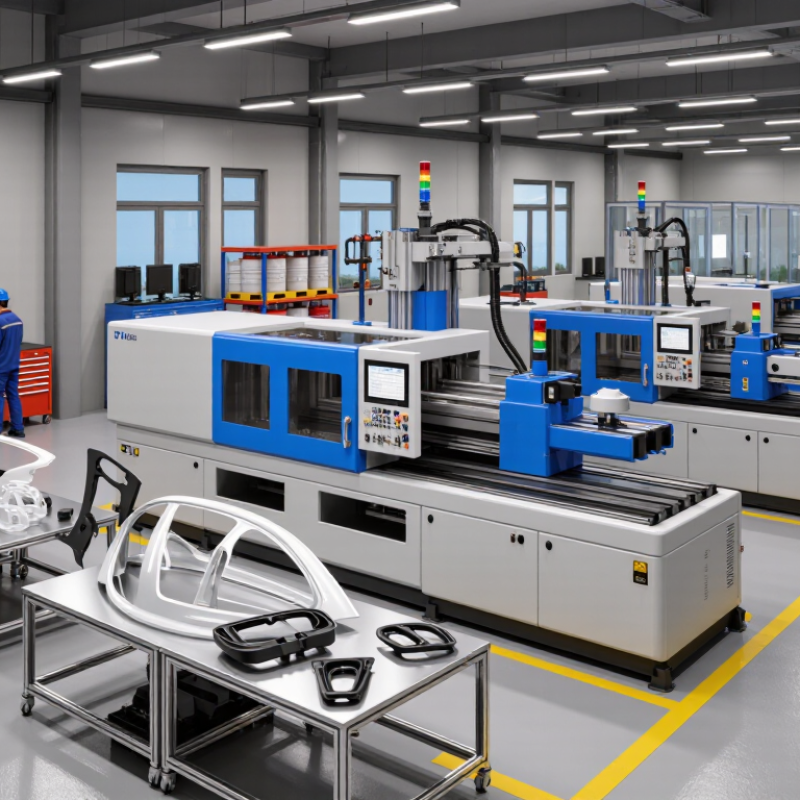
A leading automotive injection molding manufacturer in China is defined by more than modern machines or attractive production photos. Practical experience appears in the details: stable cycle times, controlled mold temperatures, and clean parting lines after thousands of shots. Engineers should understand automotive polymers, shrinkage, weld lines, and warpage before production begins. They should also review the component’s function, not only its drawing.
Strong manufacturers use documented processes for mold design, material selection, trial molding, and inspection. They can provide material certificates, dimensional reports, process records, and traceability from resin lot to finished component. Equipment such as coordinate measuring machines, optical scanners, and controlled inspection rooms supports reliable decisions. Design reviews, mold-flow analysis, and sample validation reduce expensive changes later. Small details matter. A clear corrective-action report often reveals more professionalism than a perfect presentation.
No supplier gets every first trial perfect. The important question is how openly the team identifies problems and improves the process. A warped panel, short shot, or visible sink mark should trigger evidence-based investigation, not vague promises. Buyers should examine tooling maintenance, production capacity, worker training, and quality audits during supplier evaluation. Compliance with safety, environmental, and automotive quality requirements also shows operational maturity. Some factories may offer lower prices, but weak documentation can create hidden costs through delays and rejected parts. A dependable partner communicates early, protects confidential designs, and maintains consistent results across shifts. That reliability is built on disciplined habits, not slogans.
| Evaluation Dimension | Relevant Capability or Evidence | Practical Benchmark | Why It Matters in Automotive Programs | Recommended Verification Method |
|---|---|---|---|---|
| Automotive Quality System | Documented quality management system covering design, tooling, production, inspection, traceability, and corrective action. | IATF 16949 certification is a strong qualification indicator for automotive production suppliers. | Automotive projects require controlled processes, consistent records, and systematic risk reduction. | Request a current certificate, certification scope, issuing body, and latest surveillance or audit status. |
| General Quality Management | Formal procedures for incoming inspection, process control, final inspection, nonconformance handling, and continual improvement. | ISO 9001 certification provides evidence of a structured quality management framework. | It supports repeatable production and provides a baseline for supplier evaluation. | Review the certificate scope and sample procedures rather than relying on certification claims alone. |
| Product and Process Planning | Use of APQP, control plans, process flow diagrams, PFMEA, MSA, and PPAP-related documentation where required by the customer. | Core automotive planning documents should be linked to the part number, revision, and production process. | Early risk identification helps prevent tooling changes, launch delays, and recurring defects. | Ask for a redacted sample package and verify consistency between PFMEA, control plan, and inspection records. |
| Design for Manufacturability | Parting-line review, draft-angle analysis, wall-thickness assessment, gate and weld-line review, sink-mark analysis, and ejection planning. | A formal DFM review should be completed before mold design is released for manufacture. | Automotive parts often combine cosmetic requirements, tight interfaces, clips, ribs, bosses, and dimensional constraints. | Evaluate the supplier's DFM report, proposed mold layout, and documented customer approval process. |
| Tooling Engineering | Capability to engineer mold bases, inserts, cooling circuits, hot runners or cold runners, slides, lifters, and replaceable wear components. | Tool design should include maintainability, service access, spare-part planning, and documented revision control. | Well-engineered tooling improves cycle stability, part consistency, and long-term serviceability. | Review mold-flow results, 2D drawings, 3D data, steel specifications, and preventive-maintenance plans. |
| Material Control | Control of resin grade, supplier batch, drying conditions, regrind policy, color masterbatch, and material identification. | Material certificates and batch traceability should be retained for every production lot. | Material variation can affect strength, shrinkage, appearance, dimensional stability, and regulatory compliance. | Check resin certificates, drying logs, batch records, and the documented maximum regrind percentage. |
| Dimensional Capability | Measurement of critical dimensions using calibrated gauges, CMM equipment, optical systems, or other suitable methods. | Acceptance criteria should be defined on the approved drawing, GD&T scheme, and control plan; no universal tolerance applies to every part. | Automotive components may interface with body panels, electrical systems, seals, fasteners, and moving assemblies. | Review capability studies for critical characteristics and confirm the measurement method is appropriate to the tolerance. |
| Process Capability | Statistical monitoring of critical dimensions and process parameters, including temperature, pressure, speed, and cycle time. | Common automotive programs may specify a target such as Cpk ≥ 1.33 for stable critical characteristics, subject to customer requirements. | Capability analysis helps distinguish short-term variation from long-term process performance. | Request anonymized capability studies, control charts, reaction plans, and evidence of actions taken when trends occur. |
| Injection Equipment | Machine size and configuration matched to shot weight, projected area, mold dimensions, clamping force, material, and cycle requirements. | Machine selection should be supported by documented calculations rather than nominal tonnage alone. | Correct equipment selection reduces flash, incomplete filling, excessive stress, and unstable cycle performance. | Compare machine specifications with the mold data sheet, process window, and approved production conditions. |
| Surface and Appearance Control | Defined standards for gloss, texture, color, flow marks, weld lines, sink marks, flash, scratches, and contamination. | Appearance limits should be agreed using approved samples, visual standards, lighting conditions, and viewing distance. | Interior and exterior automotive parts are often judged by visible defects as well as dimensional performance. | Review boundary samples, inspection instructions, lighting requirements, and escalation procedures for borderline defects. |
| Testing and Validation | Dimensional inspection, material verification, functional testing, environmental testing, and assembly trials as specified by the part application. | Validation plans should be based on drawing requirements, material specifications, customer standards, and application risks. | Testing confirms that the molded part performs throughout its intended operating conditions. | Request a validation matrix, test methods, laboratory qualifications, raw data, and final approval records. |
| Traceability | Ability to link finished parts to material batch, machine, mold cavity, production date, operator or shift, and inspection results. | Traceability depth should match the safety, regulatory, and customer requirements of the component. | Effective traceability supports fast containment, root-cause analysis, and targeted recalls when necessary. | Conduct a backward and forward traceability exercise using a selected production lot. |
| Mold Maintenance | Preventive maintenance for parting surfaces, cooling channels, ejector systems, slides, lifters, hot-runner components, and cavity surfaces. | Maintenance intervals should be based on cycles, condition, material, and historical failure data. | Preventive maintenance protects dimensional stability and reduces unplanned downtime. | Review maintenance logs, spare-part lists, mold-history records, and documented repair approvals. |
| Production Capacity | Available molding machines, tooling resources, shifts, labor coverage, inspection capacity, and contingency arrangements. | Capacity should be demonstrated using verified machine loading, cycle time, OEE or downtime records, and peak-demand planning. | Nominal machine count alone does not prove that a supplier can support an automotive launch or volume ramp. | Compare forecast demand with validated cycle times, available hours, maintenance downtime, and backup capacity. |
| Lead-Time Control | Defined milestones for DFM, mold design, steel ordering, machining, assembly, trial shots, corrections, validation, and production release. | A credible schedule includes engineering review gates, contingency time, and formal change control. | Automotive launch timing depends on coordinated tooling, approval, testing, and production activities. | Review a sample project schedule and compare planned milestones with historical on-time performance. |
| Supplier and Subcontractor Management | Control of steel suppliers, heat treatment, surface treatment, hot-runner components, secondary operations, and logistics partners. | Critical outsourced processes should have approved suppliers, incoming checks, and documented performance monitoring. | External process variation can affect mold life, part quality, delivery, and warranty risk. | Request a process map identifying outsourced activities and the controls applied to each one. |
| Compliance and Sustainability | Management of restricted substances, material declarations, waste, energy use, emissions, and applicable market requirements. | Compliance should be demonstrated through customer-required declarations, controlled material records, and applicable certifications or audits. | Automotive supply chains increasingly require documented environmental and substance-compliance data. | Confirm the required regulatory scope, declaration format, record retention, and change-notification process. |
| Communication and Engineering Support | Clear technical communication, bilingual documentation where needed, engineering response procedures, and controlled escalation. | Responses should identify the issue, containment action, root cause, corrective action, owner, and due date. | Fast, technically accurate communication reduces the impact of tooling and production problems. | Assess communication during a technical review and examine sample 8D or corrective-action reports. |
| Total Cost of Ownership | Tooling price, piece price, material yield, cycle time, maintenance, spare parts, logistics, quality costs, and expected mold life. | The lowest quotation should not be treated as the lowest total cost without comparing quality, service, tooling life, and risk. | A transparent cost model supports a more reliable long-term sourcing decision. | Request a quotation breakdown and compare assumptions for resin, cycle time, cavities, maintenance, packaging, and shipping. |
Related Posts
-
Top 10 Plastic Injection Molded Parts You Need to Know for Your Business
-

Top 10 Tips for Choosing a Plastic Injection Mold Expert?
-
2026 Top Trends in Automotive Injection Molding for Future Innovation
-
What is Molding Solutions and How Can They Benefit Your Business?
-
What is Plastic Injection Mold and How Does It Work?
-
Exploring Innovative Molding Solutions: Transforming Ideas into Reality Through Advanced Techniques