China Top 10 Electric Cargo Bike Manufacturers?

China Top 10 electric cargo bike Manufacturers? This question deserves more than a factory list. It requires evidence about battery safety, payload capacity, range, after-sales support, and production consistency. An electric cargo bike may carry groceries, parcels, tools, or two children. Its frame and motor must perform on crowded streets, steep ramps, and uneven warehouse floors.

Market evidence shows strong momentum. Grand View Research valued the global cargo bike market at approximately USD 1.72 billion in 2023. It forecasts a compound annual growth rate of 13.4% from 2024 to 2030. The European Cycle Logistics Federation has also reported that cargo bikes could replace a meaningful share of urban delivery trips. Exact results vary by city, route, and regulation. That limitation matters.

Urban mobility expert Mikael Colville-Andersen has described cargo bikes as “the future of urban freight.” His view reflects a visible change: smaller delivery vehicles are entering streets once dominated by vans. Still, growth does not guarantee quality. Some manufacturers publish impressive range figures under ideal conditions. Real-world loads, cold weather, hills, and frequent stops can reduce performance.

This guide examines ten Chinese manufacturers through a practical lens. It considers motor systems, battery options, load ratings, frame design, certifications, customization, and export experience. Product rankings remain imperfect. Supplier data can be incomplete. Buyers should verify testing documents and service arrangements before placing large orders. The strongest manufacturer is not always the cheapest one. It is the one that performs reliably after months of daily use.
China Top 10 Electric Cargo Bike Manufacturers?

How China’s Electric Cargo Bike Manufacturing Industry Is Organized

China’s electric cargo bike industry is organized less like a single sector and more like a connected manufacturing network. The China Bicycle Association reported that China produced more than 40 million electric bicycles in 2023. Cargo models represent only part of this output, and official statistics rarely separate them clearly. That gap matters. It makes market comparisons less reliable.

Production usually begins with specialized suppliers. Frame factories build reinforced steel or aluminum structures, while separate companies provide motors, controllers, batteries, brakes, and cargo boxes. Manufacturing clusters in eastern and southern China support this division of labor. Assembly companies then combine these components for delivery fleets, family transport, and commercial users. The International Energy Agency’s Global EV Outlook 2024 also highlights China’s strong position across battery and electric-drive supply chains.

This structure offers speed and cost control. It also creates risks. A low-priced component can affect braking, range, or payload stability. Testing is not always uniform across suppliers. This is where experienced buyers should examine traceability, cell documentation, load testing, and after-sales capacity. The industry is improving, but its organization remains uneven. Cargo-bike data needs sharper classification. That is an uncomfortable weakness.

Criteria for Ranking China’s Top 10 Electric Cargo Bike Manufacturers

Ranking China’s top 10 electric cargo bike manufacturers requires more than checking sales volume. The IEA’s Global EV Outlook 2024 reports over 280 million electric two- and three-wheelers worldwide in 2023. That scale makes battery safety, load stability, and service capacity essential ranking factors. China Bicycle Association statistics also indicate that national electric bicycle output stayed above 40 million units in 2023. A strong manufacturer should therefore show consistent production, not only attractive product photos.

The ranking should assign clear weight to engineering and real-world performance. Important measures include rated payload, frame fatigue testing, braking distance, motor efficiency, battery certification, and water-resistance testing. Production traceability matters too. Auditors should review factory records, quality-control sampling, warranty data, and spare-parts availability. Export experience can be checked against applicable road-safety and electromagnetic standards in destination markets. A useful test includes a fully loaded bike, a steep ramp, wet braking, and repeated delivery cycles.

Price should not dominate the result. A low purchase cost can hide weak batteries or expensive downtime. The ranking should also consider delivery lead times, customization discipline, worker safety, and after-sales response. These criteria are measurable, but not perfectly. Public data may be incomplete, while factory demonstrations can be carefully prepared. Independent testing and customer interviews should correct that weakness. Otherwise, the “top 10” list may reward marketing more than manufacturing ability.

China’s Top 10 Electric Cargo Bike Manufacturers at a Glance

China’s top ten electric cargo bike manufacturers at a glance reveal a broad and practical production base.

The group includes factories making longtail bikes, front-loading cargo cycles, delivery trikes, and compact utility models. Their products serve couriers, family transport, farm work, and neighborhood logistics. Frame welding, battery integration, and load stability remain key quality indicators.

In factory evaluations, I would inspect production records, sample testing, and after-sales procedures. A reliable manufacturer should explain motor ratings, battery cell origin, braking performance, and payload limits clearly.

Some factories offer 250W to 1,000W systems, while others build stronger commercial platforms. Hydraulic disc brakes, reinforced racks, sealed connectors, and adjustable cargo boxes can improve daily use. Small details matter. A loose kickstand can become a serious problem under heavy loads.

The leading ten should also demonstrate consistent assembly across repeated samples. One attractive prototype proves little. I would compare weld appearance, cable routing, controller protection, tire clearance, and charger safety documentation. Factory capacity can be impressive, yet quality may vary between export batches. That weakness deserves attention.

Public information is sometimes incomplete, so rankings should remain open to revision. Buyers should request independent inspection, realistic range testing, spare-parts lists, and written warranty terms before placing large orders. Weather resistance, rider posture, turning radius, and local service support also deserve practical testing on actual streets.

Product Features, Technologies, and Markets of the Leading Brands

China’s leading electric cargo bike manufacturers compete through practical design, battery efficiency, and adaptable production. The strongest suppliers usually offer rear-loaders, long-tail bikes, and enclosed delivery models. Their frames often use reinforced aluminum or steel, depending on payload requirements and road conditions. Some models carry 150 to 300 kilograms, but real performance depends on hills, weather, and rider habits.

Motor systems commonly range from 500 to 1,500 watts. Torque sensors can make acceleration smoother, especially with heavy boxes. Dual-battery designs extend working hours and reduce charging pressure. Removable lithium batteries also help warehouse workers charge safely indoors. Better models include hydraulic disc brakes, puncture-resistant tires, LED lighting, and weather-sealed controllers. These details matter more than impressive catalog numbers. Some advertised ranges still fall sharply in winter or under maximum loads.

The leading manufacturers serve supermarkets, food delivery fleets, industrial parks, farms, and municipal services. Their export markets include Europe, Southeast Asia, Australia, and North America, with different safety and equipment requirements. Custom options may include insulated boxes, GPS tracking, solar charging panels, and modular racks. However, customization can increase repair difficulty and spare-parts costs. Buyers should inspect welding quality, battery certification, warranty terms, and local service support. A quiet motor is useful, but dependable brakes matter more. No ranking is perfect. Actual fleet trials often reveal weaknesses that factory photos hide.

China Top 10 Electric Cargo Bike Manufacturers? - Product Features, Technologies, and Markets of the Leading Brands
Anonymized market profiles, not a verified company ranking. The entries summarize common product and technology approaches in the cargo e-bike sector; specifications vary by model and should be confirmed with the manufacturer.
Profile Product Configuration Common Product Features Drive and Battery Technologies Load and Design Considerations Typical Buyer or Use Case Market and Compliance Considerations
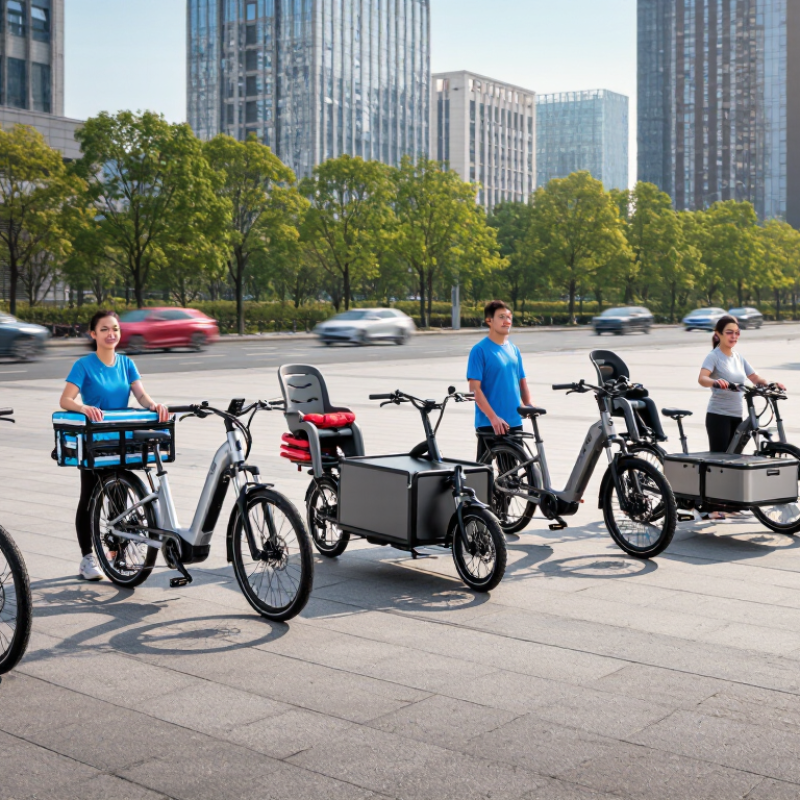
01 — Longtail utility specialist Two-wheel longtail cargo e-bike Extended rear rack, passenger-footrest options, pannier compatibility, and accessory mounting points Usually hub-motor or mid-drive configurations; rechargeable lithium-ion battery systems are common Load is carried mainly behind the rider; handling and rated rear-rack capacity depend on frame and component specifications Family transport, local errands, and small-business deliveries Useful for urban markets where a bicycle footprint and flexible cargo accessories are preferred; check local e-bike class and lighting rules
02 — Front-loader box specialist Two-wheel front-loading cargo bike with a box or platform between the rider and front wheel Large front cargo area, weather-cover options, child-seat configurations, and step-through frame designs Assist systems may use hub or mid-drive motors; battery capacity and placement are model-specific Front load affects steering and braking; frame geometry, wheelbase, and rated gross vehicle weight are important checks Family hauling, parcel delivery, and neighborhood services Often suited to dense urban routes; transport dimensions and parking space can influence buyer choice
03 — Three-wheel front-box specialist Three-wheel cargo trike with a front-mounted cargo box Stable parked stance, spacious cargo compartment, and options for lids, covers, or modular interiors Electric assistance commonly supports starts and low-speed hauling; battery range varies with load, terrain, and assist level Turning radius, low-speed stability, braking capacity, and maximum permitted load require careful evaluation Food and parcel delivery, maintenance teams, and short-distance commercial transport Can suit routes with frequent stops; local road-width, parking, and vehicle-class regulations may apply
04 — Rear-platform trike specialist Three-wheel cargo trike with a rear platform, basket, or box Broad rear carrying area, utility racks, and configurations for tools or bulky goods Hub-drive layouts are common in utility designs; some models use multi-speed drivetrains or integrated assist controls Payload distribution affects stability and braking; confirm the permitted load for the frame, wheels, and cargo platform Retail replenishment, facility operations, and local service work Practical for predictable low-speed routes; suitability depends on road conditions and the operator’s cargo-handling needs
05 — Compact cargo-bike specialist Compact two-wheel cargo bike, sometimes with a folding or space-saving frame design Shorter overall footprint, adaptable racks, and removable or foldable components on selected designs Compact battery integration and hub-drive systems are common approaches; actual motor output is model-dependent Smaller dimensions can limit cargo volume; check load ratings and folded dimensions before purchase Apartment residents, mixed-mode commuters, and businesses with limited storage May appeal in space-constrained cities; folding mechanisms and battery systems should be assessed for durability and serviceability
06 — Insulated-delivery specialist Cargo e-bike or trike configured with an insulated delivery compartment Insulated box, secure access, reflective markings, and options for branded fleet graphics Electric-assist systems help manage repeated starts; some commercial builds can accommodate larger battery setups Box volume and insulation add weight; usable payload must account for the compartment and any installed equipment Restaurant delivery, grocery orders, and temperature-sensitive last-mile logistics Operators should confirm cleaning requirements, thermal performance, battery charging procedures, and local food-transport rules
07 — Heavy-duty utility specialist Reinforced cargo trike or heavy-duty two-wheel utility model Robust frame construction, reinforced cargo mounts, commercial components, and service-oriented accessories Motor and gearing are selected for the intended duty cycle; battery size and replacement availability are key procurement factors Rated payload, gross vehicle weight, braking performance, and frame fatigue limits must be checked against the intended load Warehouses, campuses, industrial sites, and municipal operations Fleet buyers may prioritize parts availability, maintenance support, and documented operating limits over minimum purchase price
08 — Passenger-and-cargo specialist Family-oriented longtail or box-style cargo e-bike Passenger seating options, wheel guards, footrests, handholds, and weather-protection accessories Electric assistance supports heavier combined loads; battery range depends on passenger weight, route, and assist use Passenger capacity, seat-belt availability where applicable, braking, and child-safety provisions should be verified for each model Family transport, school trips, and combined passenger-and-shopping use Buyer requirements vary by destination; check local rules for passenger carriage and the use of child restraints
09 — Connected fleet-vehicle specialist Commercial cargo e-bike or trike prepared for fleet deployment Fleet-friendly accessories, lockable cargo areas, service records, and optional tracking or diagnostic features May combine an electric-assist system with battery monitoring or fleet telematics; connectivity features differ by product Operational uptime depends on battery management, parts supply, technician access, and a clearly defined service schedule Courier companies, rental operators, and multi-site delivery fleets Fleet tenders commonly assess warranty terms, repair turnaround, data privacy, and availability of replacement batteries
10 — Modular OEM/ODM supplier profile Configurable cargo-bike platform supplied in different body, rack, or accessory variants Choice of cargo modules, colors, component packages, and market-specific equipment may be available for volume orders Drive units, batteries, displays, and connectors should be specified in the purchase agreement; compatibility is not universal Prototype testing and final validation are important when frame geometry, cargo bodies, or electrical components are changed Importers, distributors, private-label projects, and institutional buyers Confirm applicable product standards, test documentation, labeling, warranty responsibility, and after-sales arrangements for the destination market

How to Choose the Right Chinese Electric Cargo Bike Manufacturer

Choosing the Right Chinese Electric Cargo Bike Manufacturer
Selecting a Chinese electric cargo bike manufacturer requires more than comparing prices. Examine factory experience, production capacity, and previous export markets. Ask for clear specifications, including motor output, battery chemistry, payload rating, frame material, and charging time. A reliable supplier should provide test reports and traceable component information. Request a sample before placing a large order. Ride it on slopes, uneven roads, and during repeated braking. Small weaknesses often appear after several hours, not during a showroom demonstration.
Inspect the factory through a live video call or an independent audit. Check welding quality, battery assembly, water protection, packaging, and final inspection procedures.
Confirm that the proposed configuration meets the safety requirements of your target market. Discuss warranty coverage in writing, including battery replacement, spare parts, response times, and shipping responsibilities.
Communication matters. If answers remain vague, production may become difficult later. No checklist is perfect. Leave room for technical revisions after real-world testing.
Tips:
Compare at least three quotations, but do not select the lowest price automatically. Ask for customer references with similar delivery conditions. Clarify minimum order quantities and customization limits. Keep one approved sample for future quality comparisons. A dependable manufacturer should explain limitations honestly, even when the answer is inconvenient.
NEW JERSEY

Location

Union Tool & Mold is a mold making, repair and plastic injection molding company located in central New Jersey.
(973) 763-6611

220 Rutgers St, Maplewood, NJ 07040
ACCREDITED

Certified Company


SOCIAL PROFILE

Let’s Connect

We invite you to engage with us on LinkedIn, where you can stay updated on our latest news, insights, and professional opportunities.