How to Implement Design for Manufacturing in Your Product Development Process?
In today's competitive landscape, "design for manufacturing" (DFM) has become crucial for successful product development. According to Jim Brown, a leading expert in the field, "Effective DFM practices can significantly reduce costs and enhance product quality." This philosophy encourages engineers to collaborate closely with manufacturers early in the design phase. Integrating DFM can streamline processes and lead to quicker market launches.
However, many companies struggle to adopt these practices fully. DFM requires a shift in mindset. Teams must recognize that designs should not just be innovative but also manufacturable. It is essential to balance creativity with practicality. The challenge lies in overcoming resistance to change. Often, teams may overlook manufacturing constraints, leading to prototypes that cannot be produced efficiently.
Incorporating DFM is not a one-size-fits-all solution. Each project presents unique challenges. Companies must evaluate their specific needs and capabilities. Reflecting on past projects can provide valuable insights. The journey towards mastering DFM may not be perfect, but it is a necessary path for those who aim to thrive in a fast-evolving market.

Understanding the Principles of Design for Manufacturing (DFM)
Design for Manufacturing (DFM) principles are essential in today's competitive market. The core idea is to simplify production. By designing products with manufacturing in mind, organizations can reduce costs and avoid production delays. A study by the National Institute of Standards and Technology showed that DFM could lower manufacturing costs by up to 30%. This can be crucial for businesses aiming for profitability.
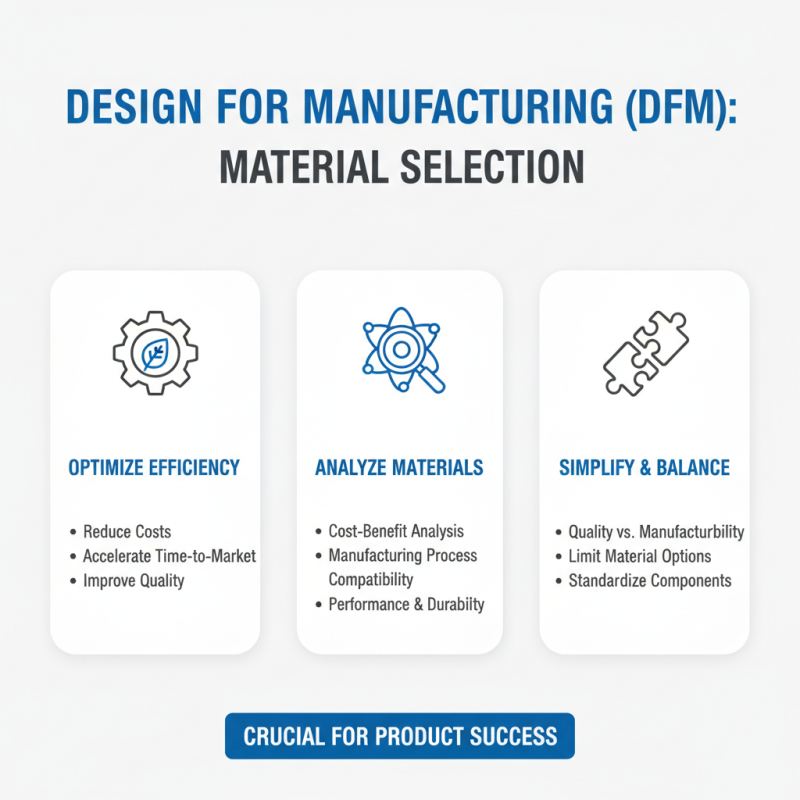
One key aspect of DFM is material selection. Choosing the right materials can significantly impact both production efficiency and product quality. However, many design teams overlook how specific materials affect manufacturing processes. For example, certain plastics can be easier to mold, resulting in faster production cycles. This small oversight can lead to delays or increased costs during implementation.
Additionally, assembly processes should be taken into account during the design phase. Streamlined assembly can reduce labor costs and time. A report by the Manufacturing Institute highlighted that reducing assembly complexity can lead to a 20% increase in efficiency. Yet, some designs become overly complicated, which may confuse workers and lead to errors. DFM emphasizes the need for simplicity, ensuring that the final product not only meets user needs but is also easy to produce.
How to Implement Design for Manufacturing in Your Product Development Process?
| Design Principle |
Description |
Benefits |
Implementation Tips |
| Simplicity |
Design products that are easy to manufacture with minimal complexity. |
Reduced production costs and faster assembly time. |
Utilize fewer parts and standard components. |
| Material Selection |
Choose materials that are readily available and easy to process. |
Improved availability and cost efficiency. |
Conduct a materials analysis early in the design phase. |
| Tolerance and Fit |
Specify appropriate tolerances to ensure quality without unnecessary precision. |
Enhanced manufacturability and reduced scrap rates. |
Use computer simulations to evaluate fits and tolerances. |
| Design for Assembly |
Focus on minimizing the number of parts and simplifying the assembly process. |
Increased productivity and reduced assembly time. |
Perform assembly analysis to identify opportunities for improvement. |
| Feedback Loop |
Incorporate feedback from manufacturing during the design phase. |
Minimized design errors and smoother production process. |
Schedule regular reviews with production teams throughout the design process. |
Identifying Key Factors for DFM Implementation in Product Development
Implementing Design for Manufacturing (DFM) in product development is crucial for efficiency. Identifying key factors can guide this process effectively. Start by analyzing the materials you plan to use. Selecting the right materials can affect costs and manufacturing time. Every material choice should balance quality and manufacturability. Too many options can lead to confusion. Simplifying choices often helps.
Another vital factor is understanding the production processes involved. Each process has its nuances. For example, some designs may look great but complicate manufacturing. It’s essential to align your design with available manufacturing techniques. Engaging production teams early in the design phase can identify potential issues before they arise. Collaboration is key, but it may not happen seamlessly.
Lastly, consider product assembly. A design that is difficult to assemble can increase labor costs and time. Using fewer components can simplify the assembly process. However, let’s not overlook the environmental impact of manufacturing choices. Reflecting on sustainability can lead to better practices. This multifaceted understanding of DFM is essential for successful product development. Don't shy away from revisiting decisions, as improvement often stems from critical reflection.
Integrating DFM Practices into the Product Design Phase
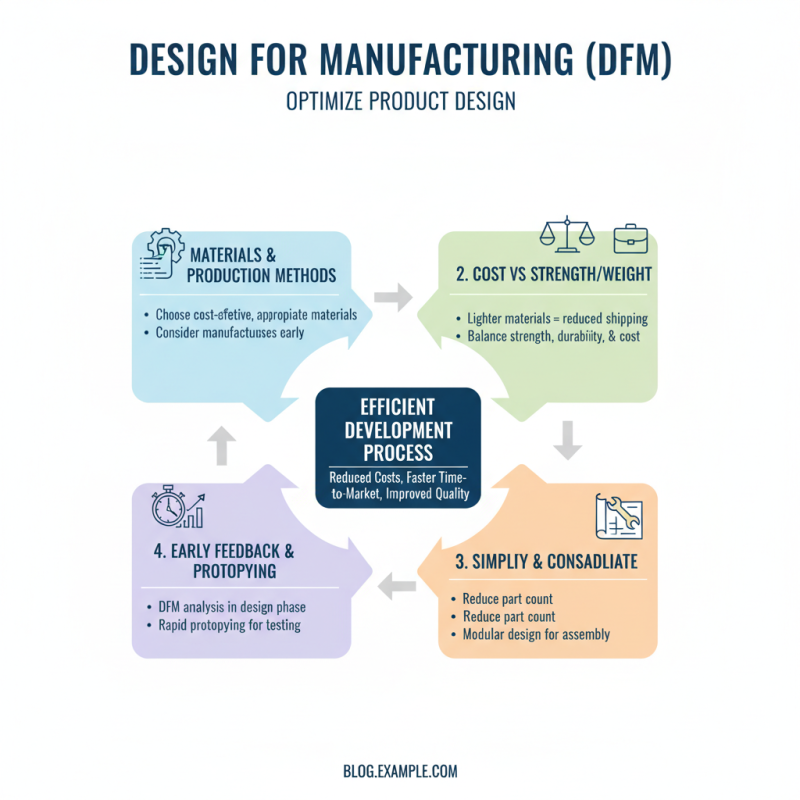
Integrating Design for Manufacturing (DFM) practices into the product design phase is essential for an efficient development process. Start by closely examining materials and production methods. Choosing appropriate materials can significantly impact manufacturing costs. For instance, using lighter materials might reduce shipping costs but could compromise strength. Balancing these factors is crucial.
Next, collaborate closely with manufacturing engineers during the design phase. Their insights can highlight potential production challenges. Sometimes, designs look perfect on paper but become problematic during actual production. Changes may be needed to avoid cost overruns or delays. Gathering feedback early can prevent costly mistakes down the line.
Moreover, keep an open mind about revising designs based on manufacturing capabilities. Sometimes, the market demands a flashy design, but practicality must rule. A complex design may win initial attention but can lead to frustrations later. Finding ways to simplify designs without losing functionality is often necessary. Challenging assumptions about aesthetics will lead to better overall product outcomes.
Collaborating with Cross-Functional Teams to Enhance DFM Efforts
Design for Manufacturing (DFM) is vital in product development.
Collaborating with cross-functional teams enhances DFM efforts.
Teams that include engineers, designers, and production specialists can identify potential issues early.
They can also streamline processes and reduce costs. For instance, an engineer may spot a design flaw that impacts manufacturing efficiency.
Effective communication is essential. Regular meetings foster discussion and feedback.
However, misalignment can occur. Designers may prioritize aesthetics over manufacturability.
Engineers might focus too much on practicality. These differing perspectives can create tension.
Encouraging open dialogue helps bridge these gaps. Each team must understand the others' priorities and constraints.
Setting clear goals is crucial. If teams don’t share a common vision, efforts can falter.
For example, if quality is overlooked, the final product might underperform.
Regular checkpoints can ensure all teams remain aligned.
Ultimately, creating a culture of collaboration helps achieve better DFM outcomes.
Evaluating and Iterating DFM Approaches for Continuous Improvement
Design for Manufacturing (DFM) plays a crucial role in modern product development. Evaluating DFM approaches requires a systematic method for continuous improvement. Many companies struggle with integration between design and production. According to recent industry reports, optimizing DFM can reduce production costs by up to 30%. Yet, not all teams implement these strategies effectively. They often overlook the feedback from manufacturing teams, leading to costly mistakes.
Iteration is key to refining DFM techniques. Regularly revisiting design prototypes can uncover inefficiencies. A study found that 60% of design flaws occur in early stages. By fostering collaboration between engineers and manufacturers, companies can better align their goals. Effective communication can expose potential issues before they escalate. However, many organizations still operate in silos, missing these critical insights.
Continuous improvement in DFM is not just about technology. It's also about culture. A report shows that companies with a strong DFM culture see up to 50% faster time to market. Fostering a mindset of reflection and adaptation is vital. Teams must embrace setbacks as learning opportunities. This shift can lead to innovative solutions that ultimately enhance product quality and reduce waste.
Design for Manufacturing (DFM) Evaluation Metrics Over Time
This chart illustrates the continuous improvement in Design for Manufacturing (DFM) evaluation scores from 2020 to 2023. The scores indicate how effectively DFM principles have been integrated into the product development process over these years.