Choosing the right Industrial Oil Boiler requires more than comparing rated capacity or purchase price. Global buyers must examine fuel quality, operating pressure, thermal efficiency, emissions performance, and local service support. A boiler that performs well in a coastal factory may struggle in a high-altitude plant with unstable fuel supply.
This guide reviews ten industrial oil boiler options for different production environments. It considers practical details, including burner control, heat-transfer design, insulation quality, control-panel usability, and maintenance access. These features affect daily reliability. They also influence long-term operating costs.
Real-world experience matters.
A dependable model should provide stable steam or hot water under changing loads. It should include essential safety controls, clear operating instructions, and documented testing records. Buyers should also confirm compliance with applicable national standards before installation. Certified engineers and authorized technicians can help verify site requirements, chimney design, water treatment, and emergency procedures.
Not every “high-efficiency” claim tells the full story. Some suppliers publish laboratory figures that may differ from factory performance. That gap deserves attention. Fuel consumption, spare-parts availability, warranty terms, and response times often reveal more than a brochure.
The best choice is rarely the cheapest unit. It is the boiler that matches production demand, fuel conditions, available space, and technical capability. This comparison offers a practical starting point, while encouraging buyers to request verified data and independent professional advice. Even strong equipment can underperform without proper commissioning, routine inspection, and trained operators.
Industrial Oil Boilers: Types, Uses, and Operating Principles
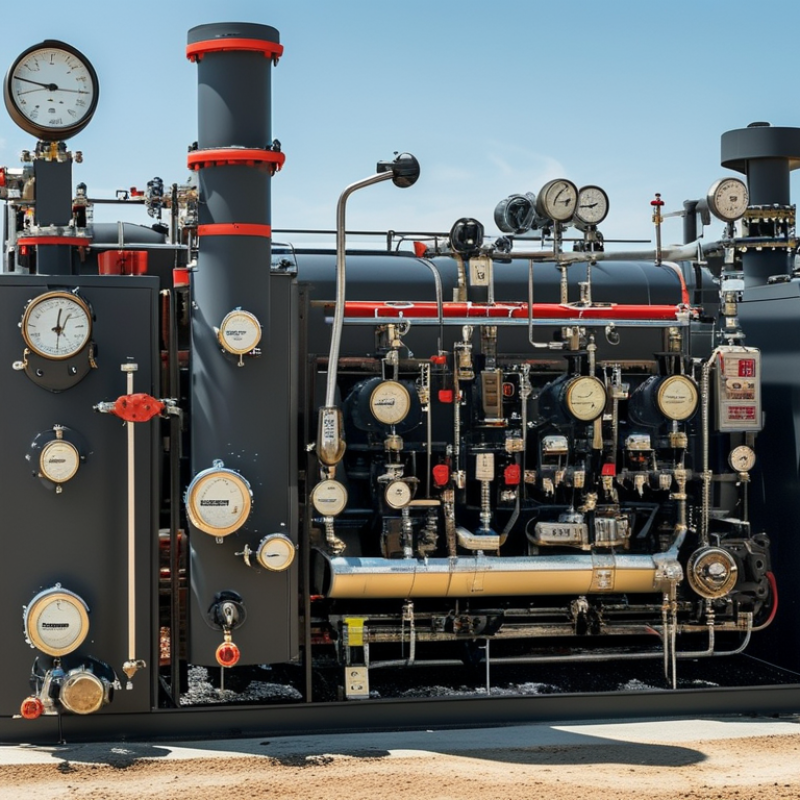
Industrial oil boilers convert liquid fuel into controlled heat for demanding commercial and process applications. In field inspections, key differences appear in boiler design, fuel systems, and heat-transfer arrangements. Fire-tube boilers send hot gases through tubes surrounded by water. They are compact and common for steam or hot-water service. Water-tube boilers reverse this path. Water flows inside the tubes while combustion gases pass around them, supporting higher pressures and faster response.
Oil-fired units may use light fuel oil, diesel, or heavier oils, depending on local supply and burner design. A pressure-atomizing burner breaks fuel into fine droplets. Air then mixes with the spray inside the furnace. An electric ignition system starts combustion, while sensors monitor flame, pressure, and temperature. The control panel adjusts fuel and air for stable output. Clean combustion matters. Poor atomization can create smoke, deposits, and wasted energy.
Factories use these boilers for textiles, food processing, chemical heating, drying, and sanitation. Hospitals and large buildings may need hot water during peak demand. Operators should check water chemistry, burner alignment, fuel filters, and safety interlocks. Neglected details become expensive. Efficiency also depends on insulation, chimney draft, return-water temperature, and load patterns. A larger boiler is not automatically better; oversized equipment may cycle frequently and consume more fuel. Real conditions can differ from catalog assumptions, so commissioning data deserves careful review.

The chart compares indicative thermal-efficiency levels for common industrial oil-boiler configurations. Actual performance depends on fuel quality, operating load, burner tuning, heat-loss control, and exhaust-gas temperature.
Typical reference values: fire-tube boilers approximately 80–85%, water-tube boilers approximately 85–92%, thermal-oil heaters approximately 80–90%, and condensing oil boilers approximately 90–98% under suitable operating conditions.
Selecting an industrial oil boiler starts with the duty profile, not the catalog price. Measure peak demand, average load, operating hours, and required steam pressure. A boiler running constantly at 25% load may waste more fuel than expected. It happens.
The International Energy Agency reports that industry uses roughly 37% of global final energy. This makes combustion efficiency and heat recovery important purchasing criteria. Compare tested seasonal efficiency, turndown ratio, stack temperature, and standby losses. A small efficiency gain can reduce annual fuel consumption across thousands of operating hours. Ask suppliers for verified test conditions, not only advertised ratings.
Fuel quality also changes the decision. Sulfur content, viscosity, storage temperature, and local supply reliability affect burner performance. The U.S. Department of Energy identifies steam-system losses, poor insulation, and malfunctioning traps as common efficiency problems. Therefore, buyers should inspect the complete system, including feedwater treatment, blowdown control, pumps, and chimney design. Emission limits differ by country and sometimes by industrial zone. Confirm certification, pressure-vessel compliance, electrical standards, and required monitoring before signing.
Service capability deserves equal weight. Review spare-parts lead times, technician coverage, remote diagnostics, and commissioning procedures. A technically efficient boiler is less valuable when downtime lasts weeks. Total cost models should include fuel, water treatment, maintenance, insurance, disposal, and future emissions controls. My practical concern is simple: many comparisons still overvalue initial price and undervalue operational uncertainty. That judgment deserves another review.
10 Best Industrial Oil Boilers for Global Buyers?
Ten Leading Industrial Oil Boiler Options Compared
Industrial buyers usually compare ten practical configurations: three-pass fire-tube, wet-back, dry-back, once-through coil, condensing oil, low-NOx, dual-fuel, modular skid, thermal-fluid, and waste-heat-assisted systems. Three-pass fire-tube models suit stable steam demand and easier maintenance. Wet-back designs generally manage furnace heat better. Dry-back units may reduce inspection complexity, but refractory wear deserves attention. Once-through boilers respond quickly, while condensing models recover heat from cooler exhaust gases. Not every site can use them.
The U.S. Department of Energy’s industrial steam guidance highlights stack temperature, excess air, blowdown, and insulation as major efficiency checks. These details often matter more than brochure capacity. The International Energy Agency’s Energy Efficiency 2023 report identifies industry as a major global energy consumer, reinforcing the value of measured fuel performance. A low-NOx option can support stricter local air-quality requirements. Dual-fuel equipment adds resilience when fuel supply changes. Useful insurance.
Thermal-fluid boilers fit processes needing steady, high-temperature heat without steam pressure. Modular skids simplify installation where floor space is limited. Waste-heat-assisted designs can reduce burner duty, but their savings depend on operating hours and exhaust temperature. Condensing equipment may approach 95% seasonal efficiency under suitable return temperatures, according to common engineering guidance, yet oil cleanliness and corrosion control remain critical. Buyers should request verified test conditions, emissions data, service access drawings, and five-year fuel estimates. Weaker comparison. Heres why: identical efficiency claims may use different test boundaries.
| Option | Boiler Configuration | Typical Oil Fuel | Typical Capacity Range | Typical Operating Pressure / Temperature | Indicative Thermal Efficiency | Key Advantages | Best Use |
|---|---|---|---|---|---|---|---|
| 1. Three-Pass Fire-Tube Steam Boiler | Horizontal shell boiler with three-pass flue-gas circulation | Light fuel oil, diesel, or low-sulfur fuel oil | 1–20 t/h steam output | 10–20 bar saturated steam | 88–93% | Stable steam production, robust construction, relatively simple operation, and good load response | Manufacturing, food processing, textiles, and general process heating |
| 2. Wet-Back Fire-Tube Boiler | Three-pass fire-tube design with a water-cooled rear turnaround chamber | Diesel, light fuel oil, or heavy fuel oil with preheating | 2–25 t/h steam output | 10–25 bar saturated steam | 87–92% | Reduced refractory wear, durable rear chamber, and suitability for continuous industrial duty | Large plants requiring reliable medium-pressure steam |
| 3. Coil-Type Once-Through Steam Boiler | Small-diameter water-coil generator with rapid steam production | Diesel or light fuel oil | 0.5–5 t/h steam output | 10–25 bar saturated steam | 85–91% | Compact footprint, fast start-up, low water inventory, and quick response to changing demand | Space-constrained facilities and intermittent process loads |
| 4. High-Pressure Water-Tube Oil Boiler | Water-tube arrangement with oil-fired furnace and convection banks | Light fuel oil, diesel, or low-sulfur residual oil | 10–100 t/h steam output | 25–80 bar saturated or superheated steam | 88–94% | Suitable for high pressure, high steam capacity, and demanding industrial operating cycles | Power generation, refineries, chemical plants, and large process facilities |
| 5. Oil-Fired Hot-Water Boiler | Pressurized shell-type hot-water boiler with modulating burner | Diesel or light fuel oil | 1–15 MW thermal output | 90/70°C to approximately 160/140°C water circuit | 88–94% | Provides closed-loop hot water without steam-system equipment and supports efficient heat distribution | District heating, warehouses, hospitals, and industrial heating networks |
| 6. Thermal-Oil Heater with Expansion System | Coil-type heater circulating synthetic or mineral thermal fluid | Diesel, light fuel oil, or heavy fuel oil | 0.5–20 MW thermal output | Typically 250–320°C thermal-fluid outlet temperature at near-atmospheric pressure | 80–88% | High-temperature heat transfer without high steam pressure and with precise process-temperature control | Food, chemical, asphalt, wood, and specialty manufacturing processes |
| 7. Condensing Oil Boiler | High-efficiency boiler with flue-gas heat recovery and corrosion-resistant heat exchanger | Ultra-low-sulfur diesel or low-sulfur heating oil | 0.2–5 MW thermal output | Up to approximately 6 bar for hot-water systems | 94–98%* | Can recover latent heat when return-water temperatures are low and fuel sulfur content is controlled | Low-temperature hot-water systems with long annual operating hours |
| 8. Low-NOx Modulating Oil Boiler | Pressure-jet or rotary-cup burner with staged or modulating combustion control | Diesel or low-sulfur light fuel oil | 1–15 MW thermal output | Hot water up to 160°C or steam up to 20 bar, depending on design | 87–93% | Improved part-load efficiency and lower nitrogen-oxide emissions than conventional fixed-rate combustion | Urban or regulated areas with strict air-quality requirements |
| 9. Dual-Fuel Oil and Gas Boiler | Packaged boiler with interchangeable or dual-fuel burner system | Natural gas, LPG, diesel, or light fuel oil | 1–30 t/h steam output | 10–25 bar saturated steam | 88–94% | Fuel flexibility improves supply resilience and allows operation when one fuel is unavailable or uneconomic | Sites with variable fuel availability or strategic fuel-security needs |
| 10. Containerized Packaged Oil Boiler | Factory-assembled boiler, burner, pump set, controls, and auxiliaries in a transportable enclosure | Diesel or light fuel oil | 0.5–10 t/h steam output | 8–20 bar saturated steam | 85–92% | Fast deployment, reduced site construction, integrated controls, and suitability for temporary or remote installations | Construction projects, emergency heating, remote sites, and capacity expansion |
Industrial buyers should compare seasonal efficiency, not only the nameplate percentage. The IEA’s Energy Efficiency 2023 report states that industry consumes about 37% of global final energy. Small losses therefore become significant operating costs. A boiler with effective heat recovery can reduce stack losses, especially in hot-water applications. Steam systems need careful analysis because condensing exhaust may cause corrosion. A perfect efficiency figure is rarely real.
Emissions deserve equal attention. The EU Large Combustion Plants reference document identifies nitrogen oxides, sulfur oxides, dust, and carbon monoxide as key pollutants. Select low-NOx combustion controls, suitable fuel quality, and verified flue-gas monitoring. Local limits differ widely. Safety also depends on design and habits. Pressure relief devices, flame-failure protection, automatic fuel shutoff, and documented operator training are essential. ISO 45001 can support a structured safety system, but it cannot replace site-specific risk assessment. That part is often underestimated.
Tips: Ask for tested seasonal performance under your actual load profile. Inspect burner alignment, refractory surfaces, and soot levels during every planned shutdown. Follow the U.S. Department of Energy steam-system guidance on leak control and condensate recovery. Keep water-treatment records beside the boiler log. Maintenance intervals should reflect fuel sulfur, operating hours, water chemistry, and start-stop frequency. Cheap inspection schedules can become expensive decisions.
For global buyers, the best industrial oil boiler is not the cheapest unit. It must suit local regulations, fuel quality, operating hours, and service capacity. The International Energy Agency reports that industry consumed about 37% of global final energy in 2022. Efficiency is therefore a purchasing issue, not just an engineering detail. Request tested efficiency, burner turndown, stack temperature, fuel consumption, and guaranteed emissions. Do not trust catalogue ratings alone.
Compliance begins before shipment. Confirm pressure-vessel design, material certificates, welding records, safety-valve settings, and factory acceptance testing. European projects may require conformity with the Pressure Equipment Directive, while other markets may reference ASME Boiler and Pressure Vessel Code requirements. Local emissions, fuel-storage, chimney, and electrical rules still apply. A certificate from the exporting country may not satisfy the importing authority. This is often missed.
Installation quality decides real performance. Provide treated feedwater, correct foundation loads, adequate ventilation, and a commissioned burner. Keep critical spares locally, including nozzles, sensors, gaskets, and control relays. The World Bank’s 2023 Logistics Performance Index shows major differences in customs reliability and delivery performance between markets. Buyers should negotiate spare-parts lead times and technician response times, not vague “global support.” Remote diagnostics help, but they cannot replace a trained local operator. Even careful tenders can overlook operator training. That weakness deserves a second review.
